

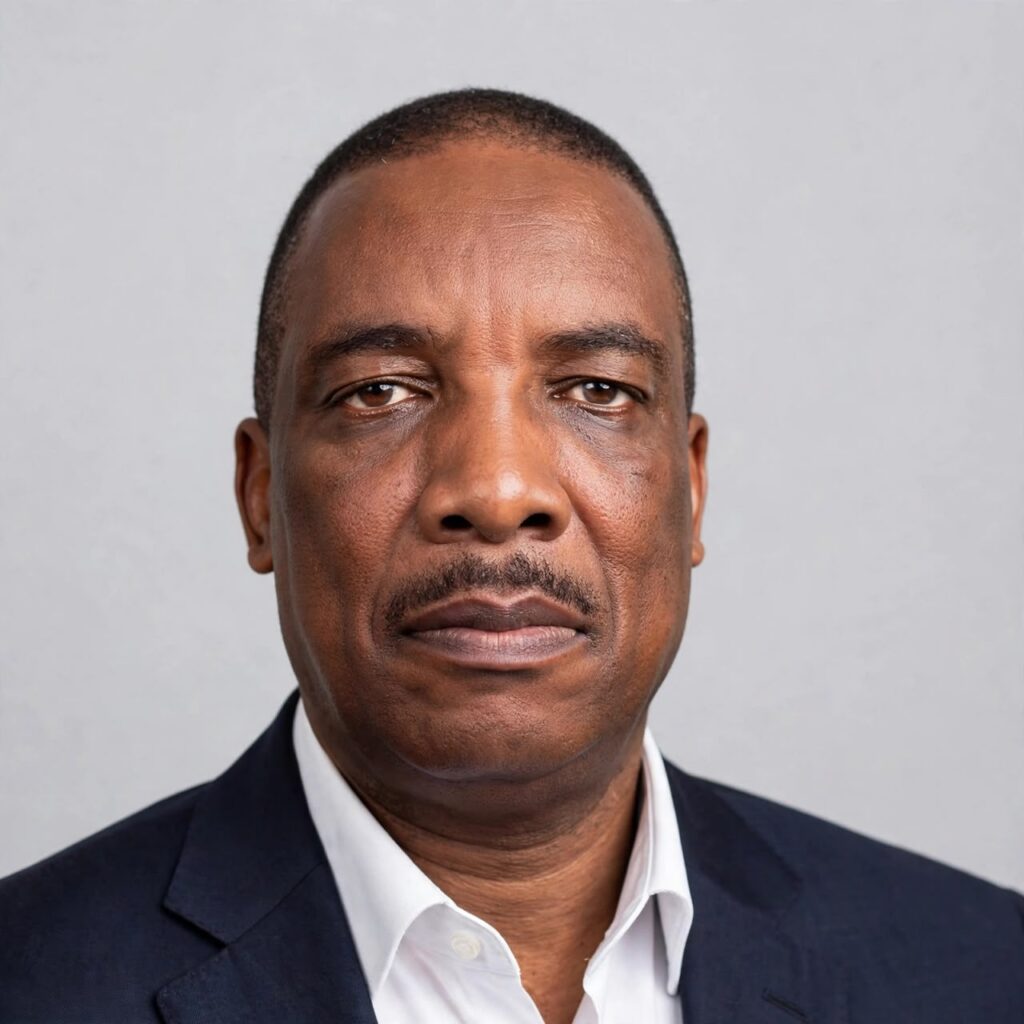
The experience behind the work.
Prof. John Msuya is one of Tanzania’s most experienced voices on nutrition and food systems. For nearly four decades he has worked where agriculture, food economics and human nutrition meet. He joined INUKA Africa as Senior Advisor after a 39-year career at Sokoine University of Agriculture (SUA), where he retired in 2024 as Professor of Nutrition and Development Economics. At SUA he served as Head of Department and trained generations of nutritionists, food scientists and agricultural economists.
He has helped write several of the policies that guide Tanzania’s food and nutrition work. He was Lead Consultant for the Second National Multisectoral Nutrition Action Plan (NMNAP II, 2021/22–2025/26). He developed the country’s National Biofortification Guidelines with HarvestPlus, which cover the whole value chain from seed varieties to consumption. He also contributed to the National Food Security Strategy and helped build the Tanzania Hunger and Nutrition Commitment Index. In 2023 he led a team of six experts for Big Win Philanthropy in a rapid assessment of the drivers of stunting across eight regions of Mainland Tanzania and Zanzibar.
Prof. Msuya is a trusted evaluator and adviser to the people who fund and run food and nutrition programs. His clients include UNICEF, FAO, WFP, the European Union, USAID, Nutrition International, the Belgian and Dutch governments, the Institute of Development Studies and Rikolto. He has evaluated nutrition-sensitive agriculture, food fortification and climate-resilience programs, including Feed the Future, Lishe Endelevu, Boresha Lishe and the EU-funded Igunga Eco-Village. He has also analyzed the food environments of Arusha and Mbeya under the Food Smart Cities initiative.
He has published more than 40 journal articles, books and technical works. His research covers indigenous vegetables, dietary diversity, infant and young child feeding, and nutrition governance. He has worked on multi-country research with partners in Germany, East Africa and Southern Africa. He holds a PhD in Food Economics from the University of Kiel in Germany, an MSc in Human Nutrition from the University of Otago in New Zealand, and a BSc in Agriculture from SUA. At INUKA Africa, he guides the organization’s work linking agriculture, food systems and nutrition to better health outcomes.